

Seismic Assessments Explained: What Building Owners Need to Know
Author: Kent Julve | Associate Director, Structural Engineering at Hampton Jones | BSc (Civil Eng), CMEngNZ, CPEng
Many building owners know they need a seismic assessment, but are often unsure what type of assessment is required, what the results mean, and when strengthening work becomes necessary. Understanding the difference between an Initial Seismic Assessment (ISA), a Detailed Seismic Assessment (DSA), and seismic strengthening can help property owners make informed decisions about risk, compliance, and investment.
A seismic assessment is not simply about determining whether a building is “safe” or “unsafe”. It is a structured process for understanding how a building is expected to perform during an earthquake, identifying vulnerabilities, and determining whether further investigation or strengthening may be warranted. The appropriate level of assessment depends on the building’s age, construction type, use, structural system, available documentation, and the decisions the building owner needs to make.
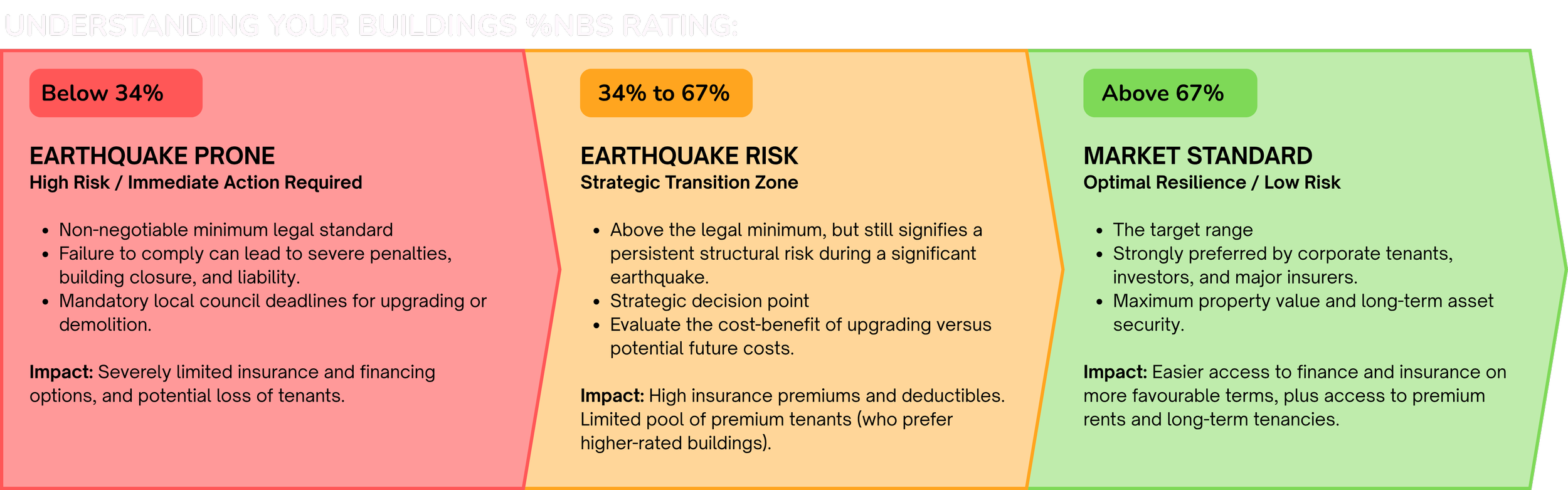
What is an Initial Seismic Assessment (ISA)?
An ISA is a quick structural review of a building's likely seismic performance. It uses existing information and engineering judgement to identify potential seismic risks and provide an indicative percentage of New Building Standard (%NBS) rating.
Typically used when:
Screening a portfolio of buildings
Prioritising buildings for further investigation
Supporting property acquisition or due diligence decisions
Outcome:
Provides an indicative understanding of seismic risk
May recommend a Detailed Seismic Assessment if further investigation is required
What is a Detailed Seismic Assessment (DSA)?
A DSA is a comprehensive engineering evaluation that involves detailed calculations, building analysis, and often further site investigations.
Typically used when:
Greater certainty is required
Significant investment decisions are being made
Remediation or strengthening work is being considered
Outcome:
More accurate %NBS rating
Identification of specific structural weaknesses
Basis for strengthening design if required
Seismic strengthening is the process of improving a building's ability to withstand earthquake loads after the dsa process which includes detailed structural drawings and further calculations required for building consent application.
Strengthening solutions vary depending on the building and may include:
Structural steel strengthening
Wall and diaphragm upgrades
Foundation improvements
Connection strengthening
Targeted remediation of specific structural deficiencies
Outcome:
Improved seismic performance
Reduced risk to occupants
Increased resilience and asset value
Ability to meet project or compliance objectives
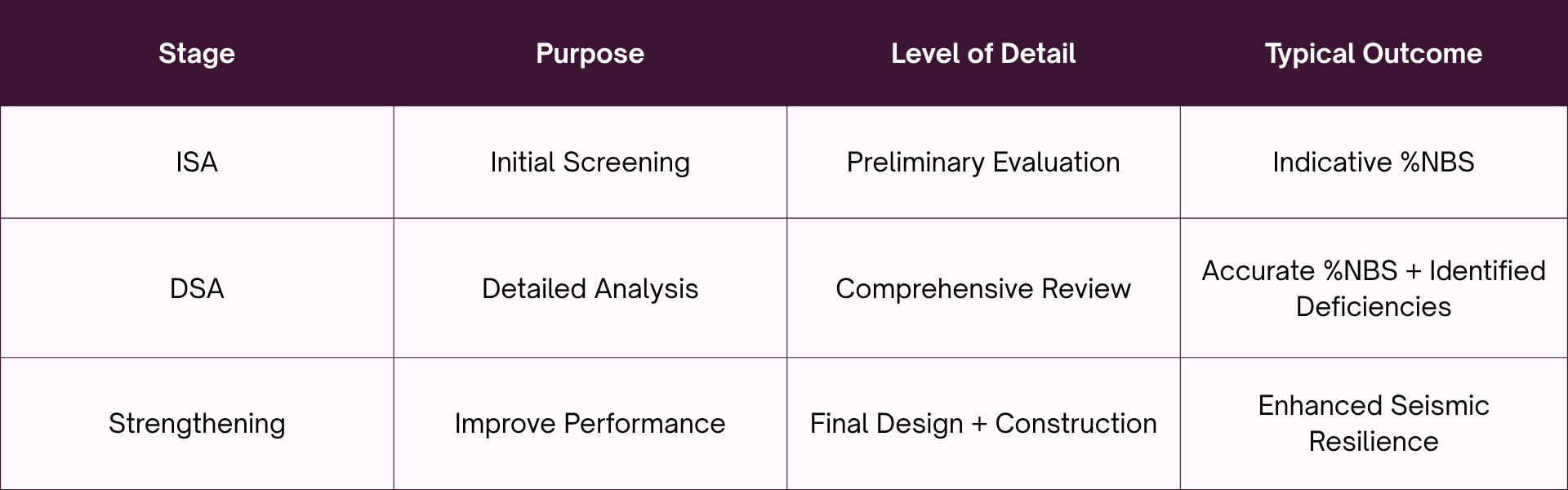
ISA vs DSA vs Strengthening at a Glance
Why It Matters for Building Owners
Understanding the right stage for your building can help avoid unnecessary costs while ensuring risks are properly managed. Whether you're purchasing a property, managing a portfolio, planning a redevelopment, or responding to compliance requirements, selecting the appropriate assessment pathway is critical.
A seismic assessment can provide building owners with more than a structural rating. It can help identify where the greatest risks are within a building and support a practical, staged approach to managing those risks. For property transactions, an assessment can provide valuable information for understanding potential seismic liabilities before committing to a significant investment.
Where a building is identified as potentially earthquake-prone, owners should also understand the distinction between an engineering assessment and their statutory obligations under the Building Act. A seismic assessment provides technical information to support decision-making, while specific legal requirements may depend on the building, its location, use, and the relevant regulatory provisions.